Physical AI metaphor
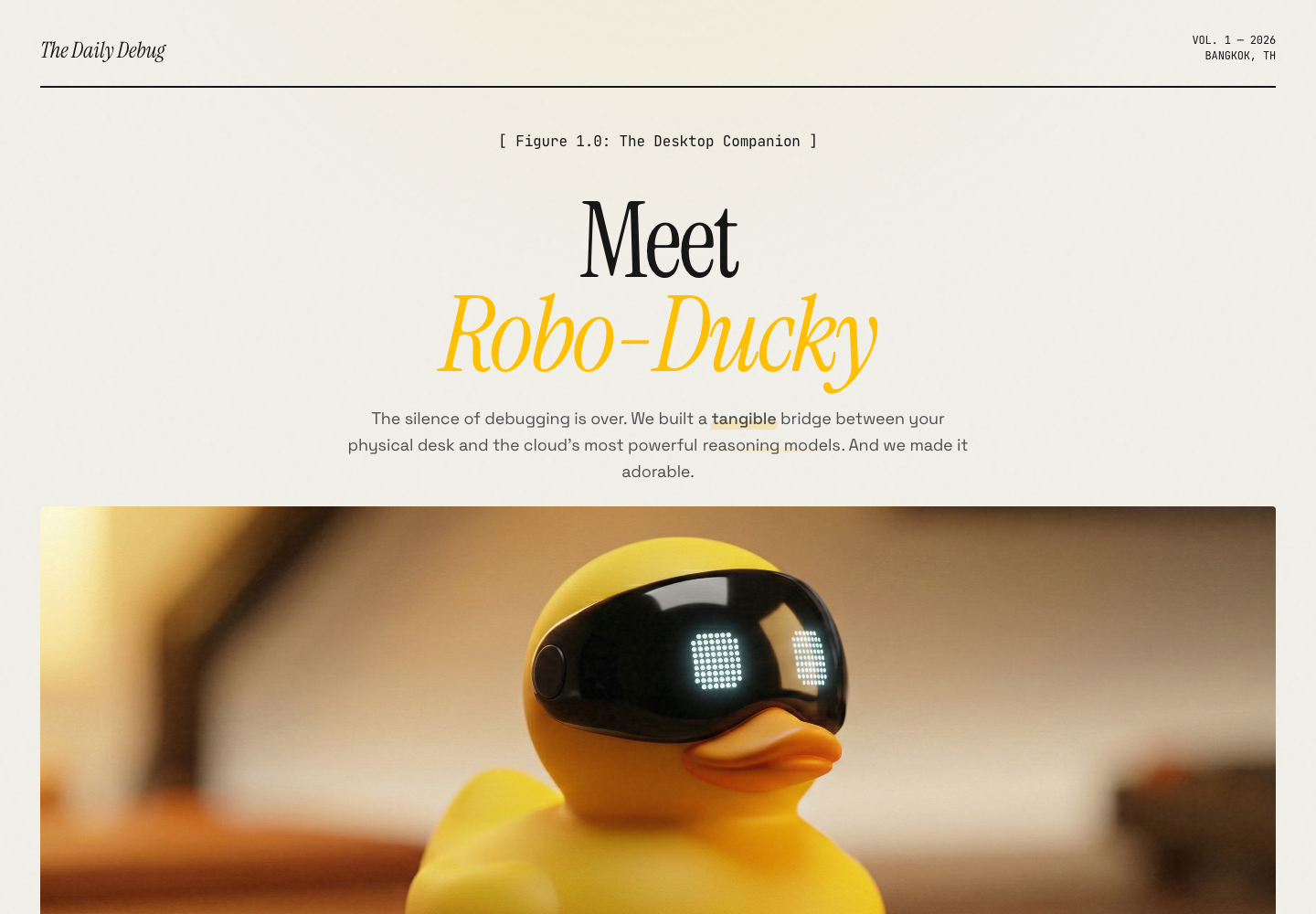
The familiar rubber duck becomes a tangible endpoint for talking through code, capturing audio, and routing help.
Open-source AI hardware concept
A rubber duck with an AI brain, designed like a real open hardware product.
Project story
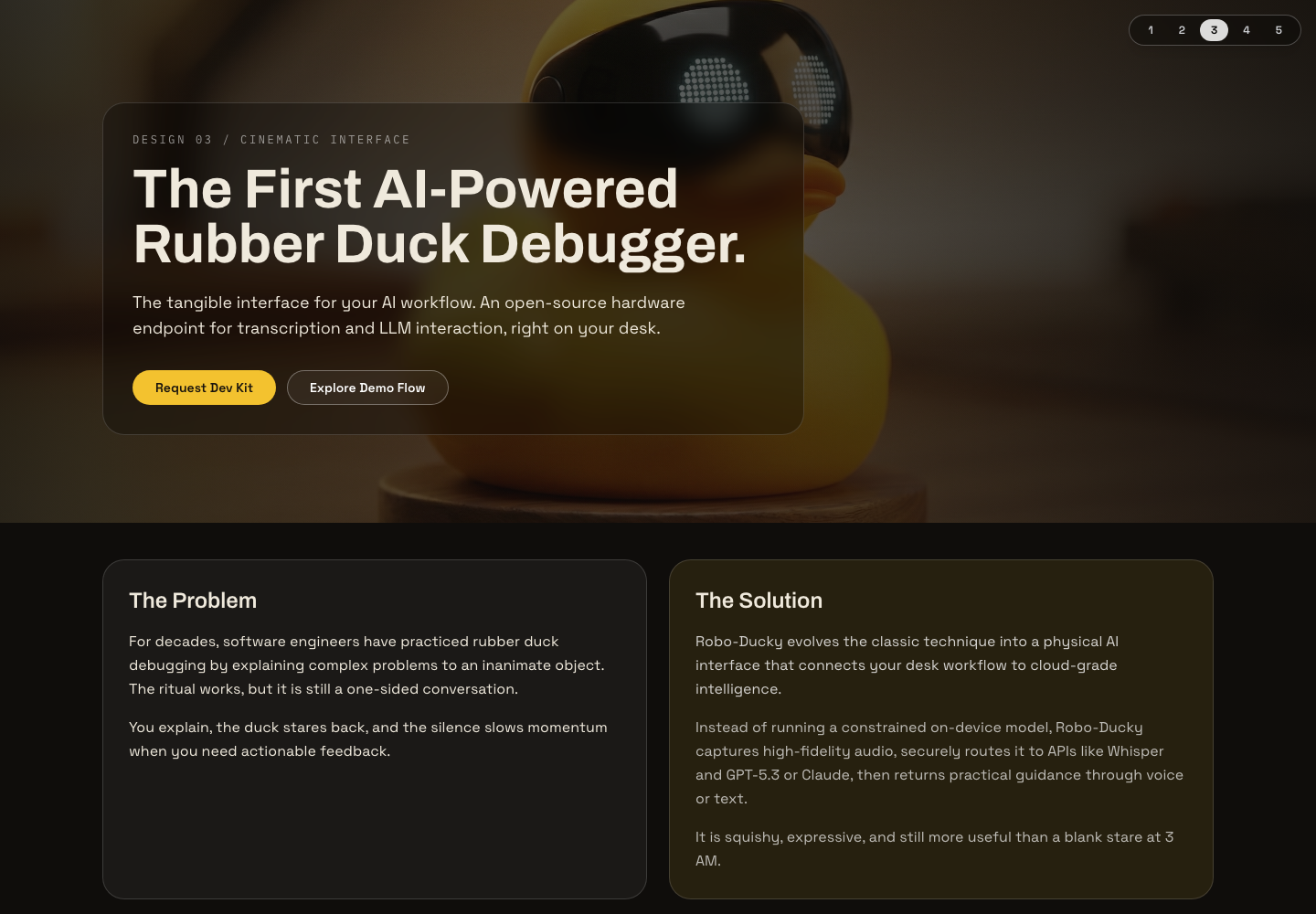
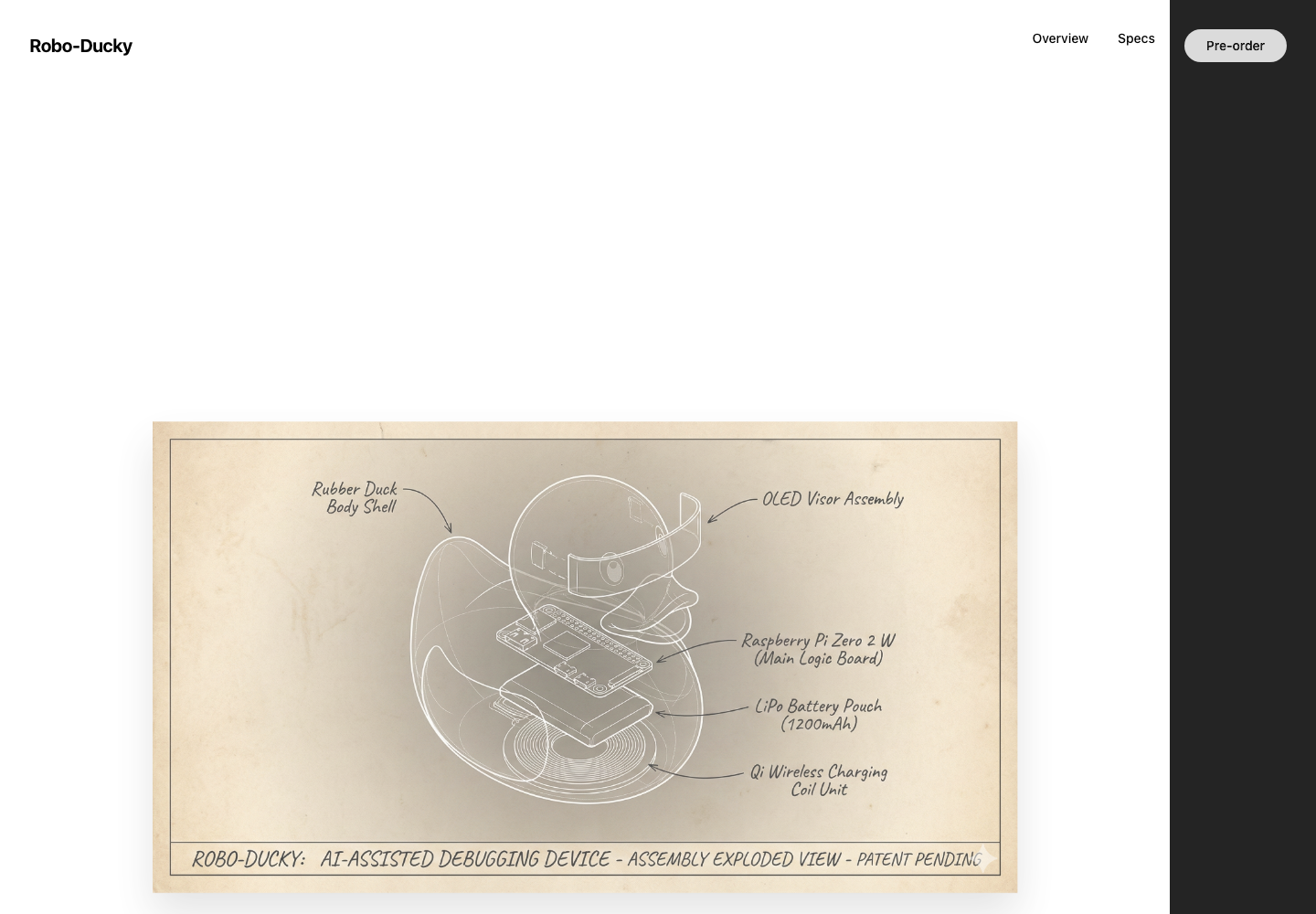
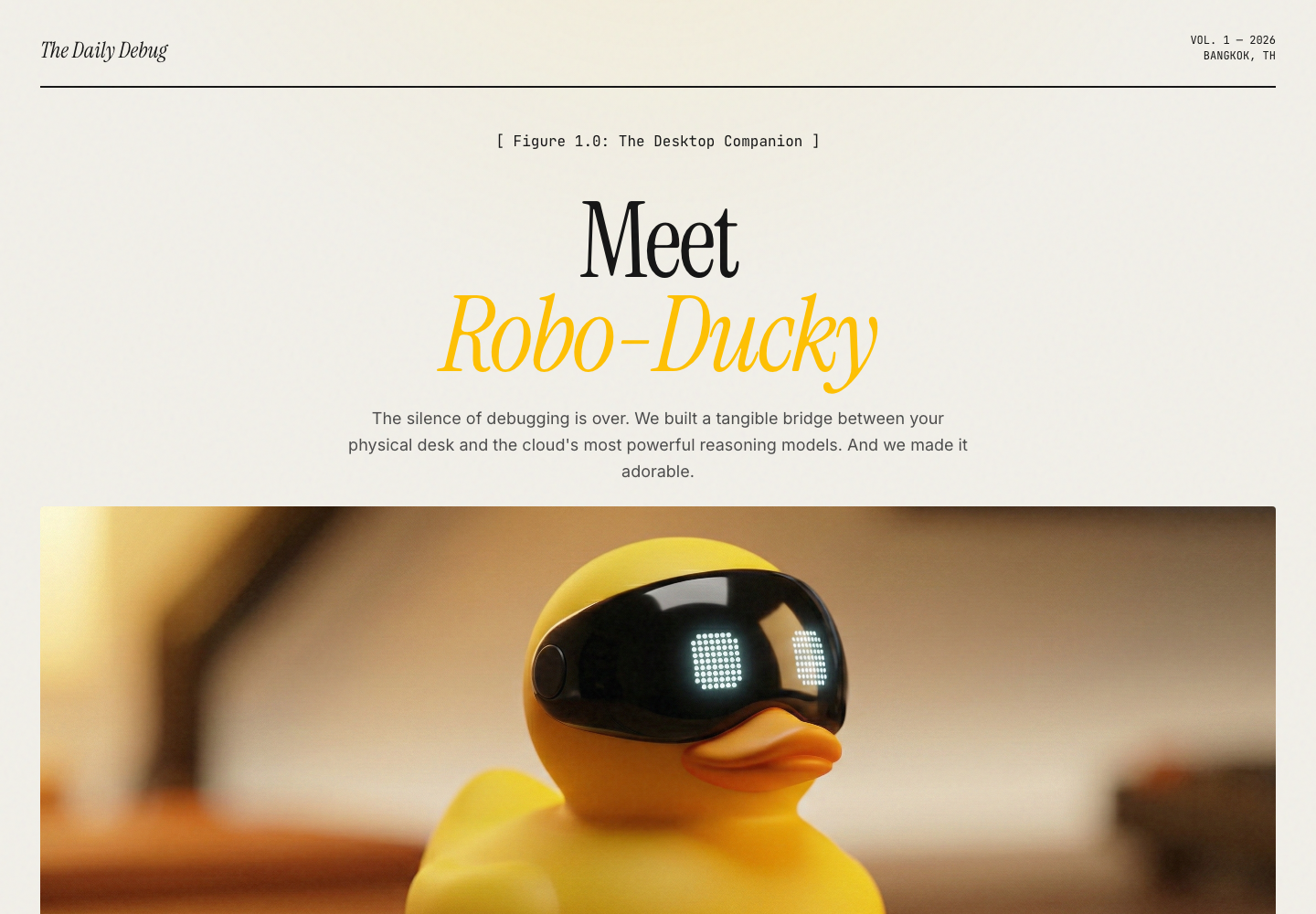
Robo-Ducky works because the joke has a product spine. A rubber duck is already a debugging ritual, so adding a microphone, visor, Raspberry Pi, and local-control posture makes the concept feel oddly natural.
The demo also shows a useful creative workflow. Product narrative, image generation, hardware diagrams, landing-page variants, and market framing all move together instead of living as separate scraps.
The strongest version is not the loudest one. It is the one where the duck feels cute, useful, buildable, and owned by the person at the desk.
Direction
The familiar rubber duck becomes a tangible endpoint for talking through code, capturing audio, and routing help.
The Raspberry Pi direction keeps the product close to the user instead of locking the whole experience behind a black box.
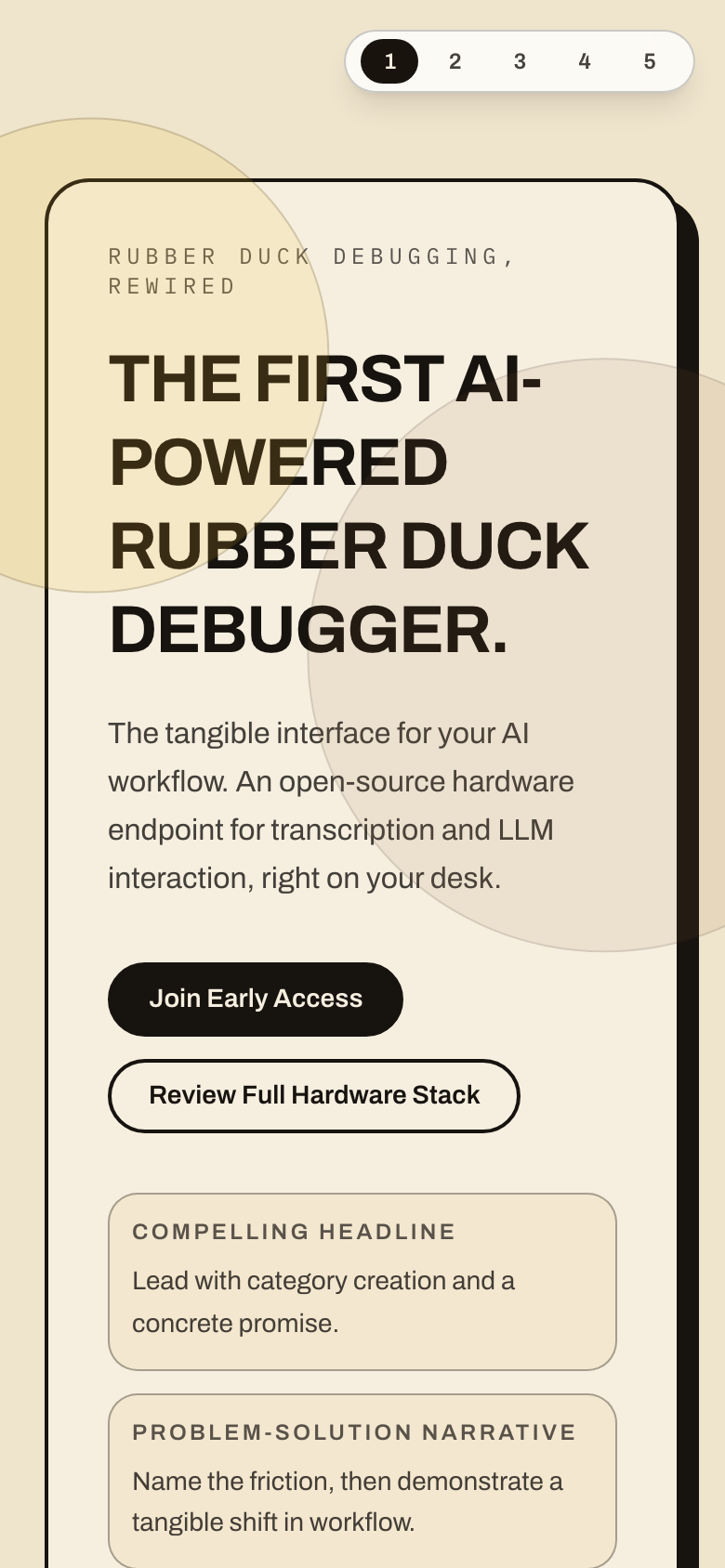
Generated product images, blueprint-style assets, and landing variants build a coherent offer around the device.
Build notes
AI hardware / Raspberry Pi / product narrative
Raspberry Pi companion, product story, and launch demo
Product demo and image-generation design study
The current shape is friendly to static hosting. A production version could keep the front end simple, then add API routes only where the workflow needs live data.