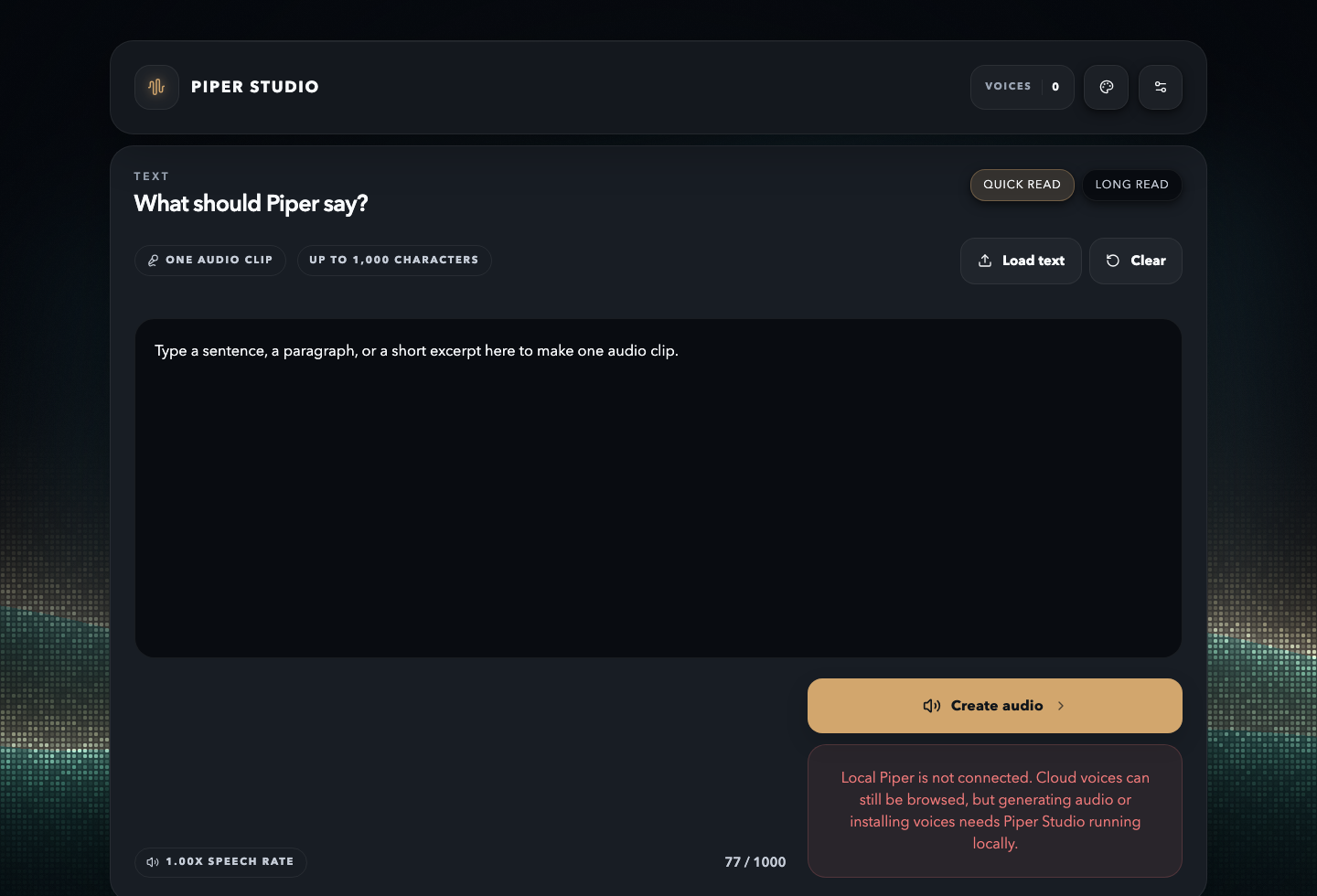
Local engine workflow
The interface makes the state of Piper, text, rate, queue, and output visible.
Local TTS workstation
Local text-to-speech shaped into a desktop app people can actually use.
Project story
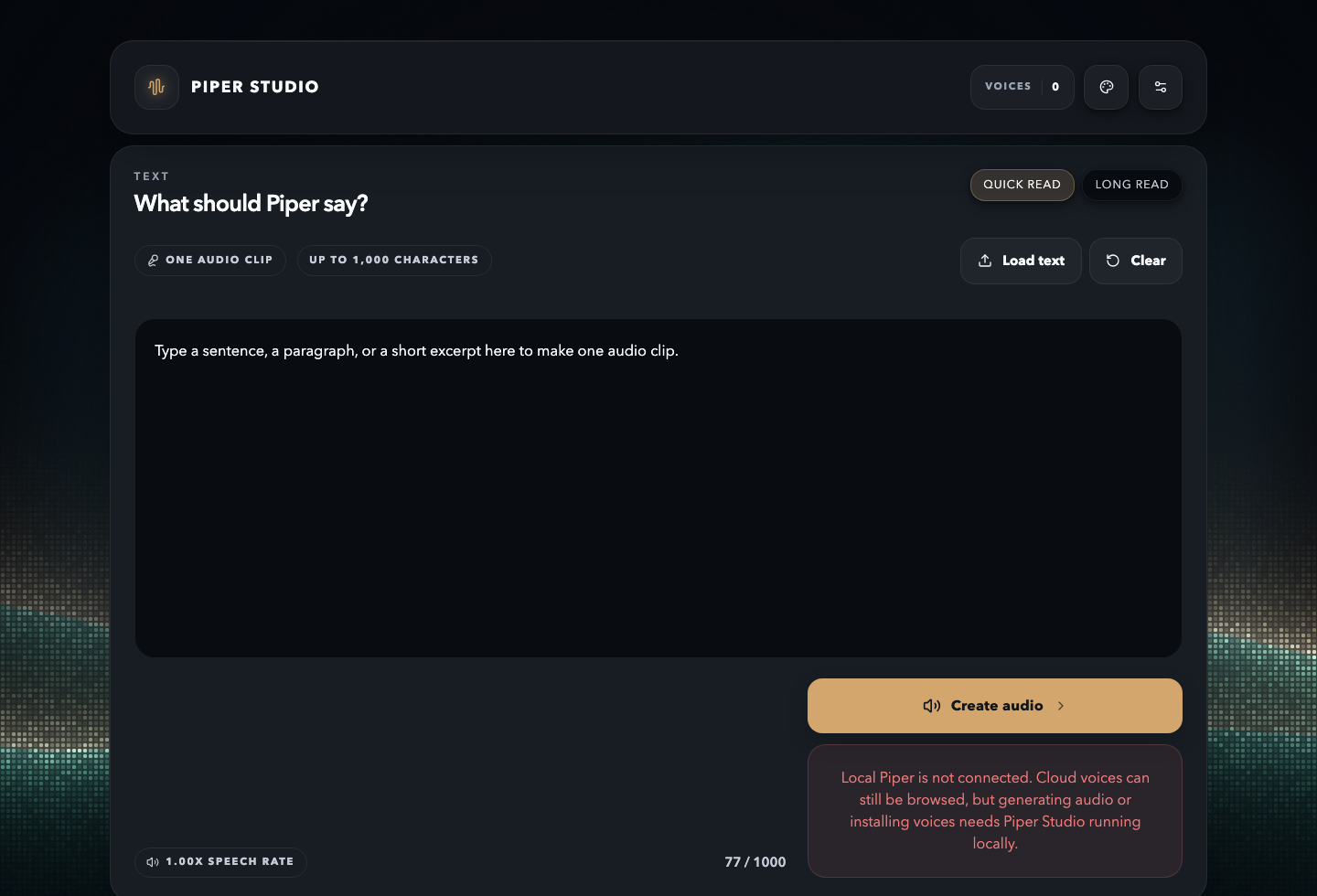
Piper Studio is more utilitarian than Supertonic, which is useful. It shows the operational side of local speech: text length, rate, connection state, queue behavior, and export.
The product is built around a real friction point. Local engines are powerful, but they need a clear desktop surface before they feel approachable.
The build also carries packaging intent, with Electron, backend runtime work, and local voice assets treated as part of the product.
Direction
The interface makes the state of Piper, text, rate, queue, and output visible.
Electron, backend packaging, and voice resources point toward a real utility app.
Write, synthesize, play, adjust, and export are kept close together.
Build notes
Piper TTS / local AI / desktop app
Electron voice app and synthesis queue
Desktop packaging track
The concept can be hosted first as a lightweight portfolio preview, then expanded with the services, storage, and analytics required by the real product workflow.